ServicesLand Clearing
Land Clearing in Mills River
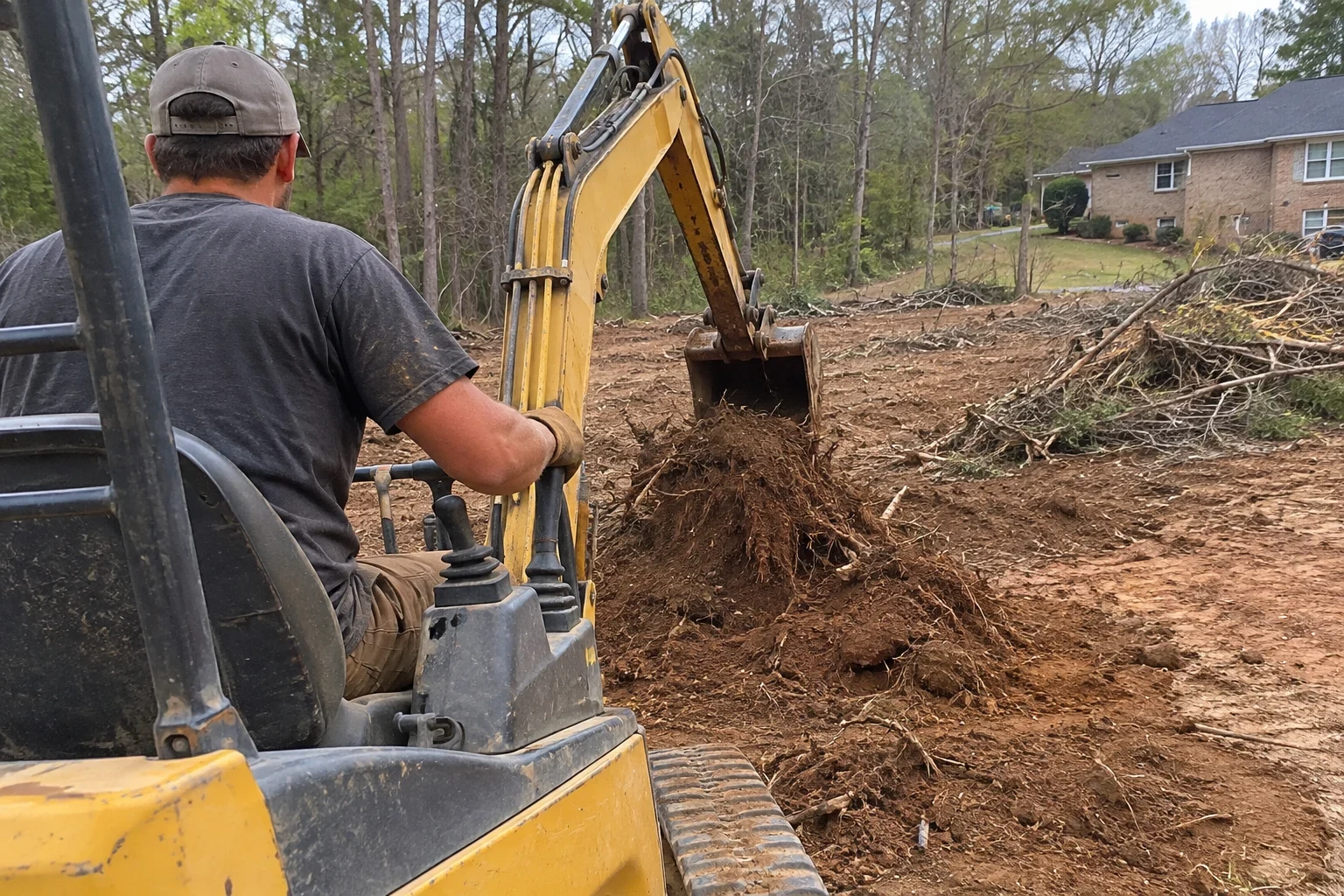
We clear wooded and overgrown lots for a new custom home, an addition or a long driveway, and we take out only what the plan calls for. You get photos of the lot before, during and after, so you can see which trees stayed, where stumps came out and how the ground was left.
Clearing that starts with the house plan
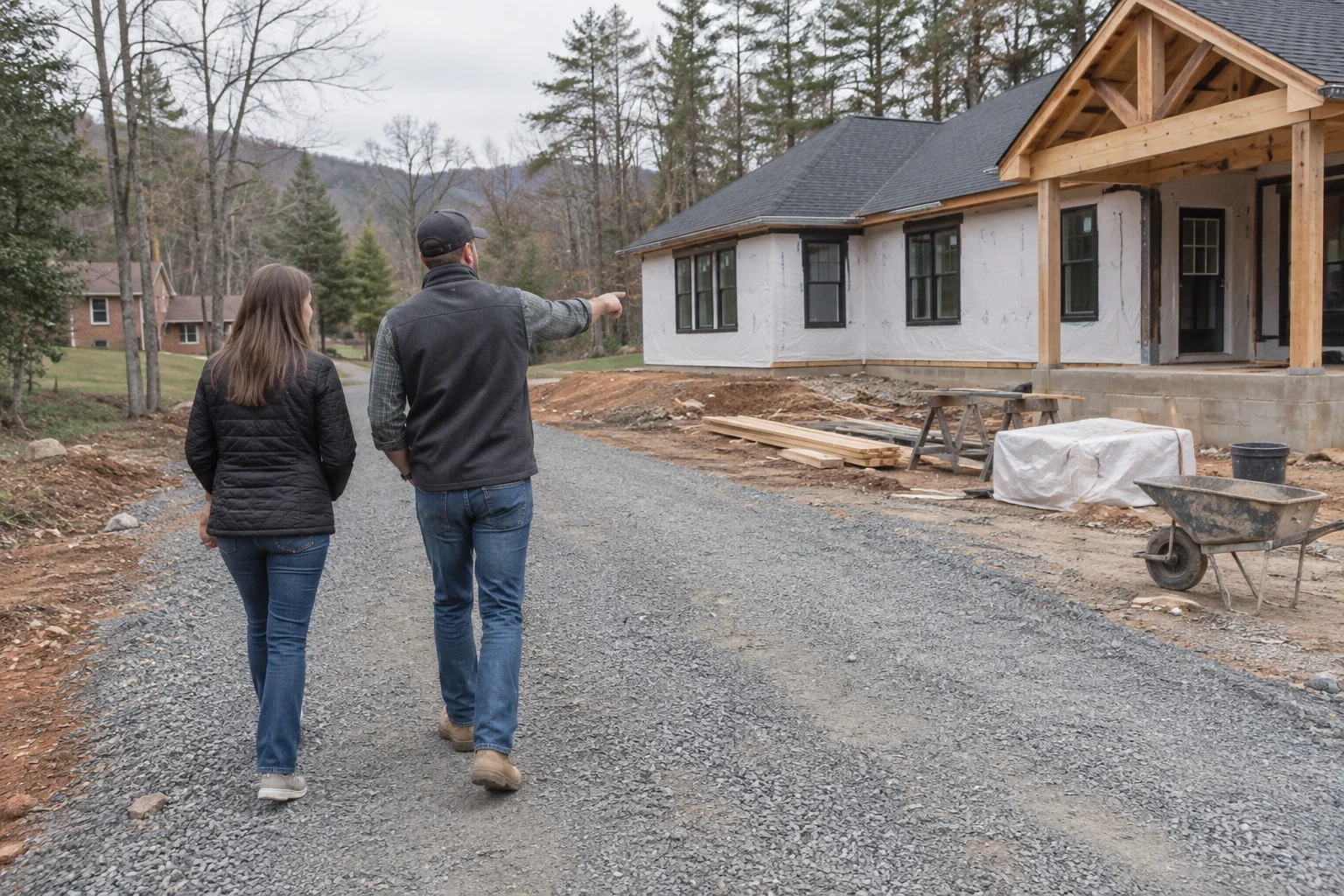
Land clearing is the first real work on a building lot, and it is the easiest place to make a mistake you live with for decades. Once a mature oak is down, it stays down. We walk the lot with you, flag the house footprint, driveway, septic area and utility path, and mark the trees worth keeping before any equipment arrives.
Lots around Mills River often carry mixed hardwoods, pine and dense laurel on a slope, with clay and rock close to the surface. That shapes how we work. We remove stumps where the foundation and driveway will sit, leave roots in place on banks that need holding, and keep the disturbed area as small as the build allows.
Each stage is photographed and shared with you. That helps if you live elsewhere while the lot is prepared, and it gives the grading and foundation crews a clear record of what was in the ground.
What our land clearing covers
Lot walk and tree marking
We flag the clearing limits and tag the trees to save with you on site. Protected trees get a marked root zone so equipment stays off it.
Tree and brush removal
Trees, saplings and undergrowth come out inside the agreed limits. Usable logs can be cut and stacked if you would like firewood.
Stump and root removal
Stumps under the future foundation, driveway and septic field are pulled, since buried wood rots and leaves soft spots under a slab or footing. Outside the build area we can grind them flush or leave them to hold the soil.
Debris handling
Brush is chipped, hauled away or burned where local rules allow it. We explain each option and how it affects the price before work starts.
Erosion control
Silt fence and other measures go in before the ground is opened. Exposed soil is left stable so the first heavy rain does not carry it off the lot.
A photo record you keep
You get dated images before work, at each stage and at handoff, with notes on anything found along the way, such as old debris piles, rock outcrops or wet spots.
Signs your lot is ready to clear
- Your floor plan is settled
- Once the house plan and site plan are set, clearing can be scheduled so grading and foundation work follow without a long gap.
- You cannot walk the lot
- If the brush is too thick to see where the house would sit, a partial clearing opens sight lines so you and your designer can place the home well.
- Dead or leaning trees near the build
- Trees that would hang over the roof or driveway are far easier to remove now than after framing is up.
- An addition or outbuilding is planned
- Clearing for an addition, a garage or a longer driveway on an existing property follows the same careful steps at a smaller scale.
- Old fill or buried debris
- Buried stumps, old dump spots and brush piles need to come out before anyone builds over them.
How a clearing job runs
- 1
Consultation and site walk
We talk through your plans by phone, then walk the lot together. We look at access, slope, tree size and where water runs after a storm.
- 2
Written scope and permits
You receive a written scope listing the clearing limits, the trees staying and how debris will be handled. If the disturbed area needs an erosion control plan or another permit, we tell you before work begins and line it up.
- 3
Clearing days
Erosion control goes in first. Trees come down, brush is processed and stumps are removed in the build zones, and each area is documented as it is finished.
- 4
Walkthrough and handoff
We walk the cleared lot with you and go over the record together. The site is left ready for grading, and if we are handling that or the foundation work too, the same notes carry forward.
What moves the price of clearing a lot
Two lots of the same size can need very different amounts of work, so we set a price only after walking yours. Your written scope lists the main pieces of the job separately. That way you see what each part adds and can trim or expand the plan before anything is cut.
- Acreage and tree density
- A lightly wooded half acre and a thick stand of mature hardwoods on the same footprint are very different jobs.
- Slope and access
- Steep ground and narrow entrances limit which machines can work and how quickly. Some trees have to come down in sections.
- How many stumps come out
- Pulling every stump costs more than removing only those in the build area. We will tell you which ones truly need to go.
- Debris disposal
- Hauling off site, chipping on site and burning where permitted each carry a different cost.
- Rock and soil
- Rock found during stump removal can mean extra equipment time. We document it and talk with you before going further.
Land clearing questions
- Can you save specific trees near the house site?
- Yes. We tag them during the site walk and fence off the root zone, roughly out to the drip line, so machines do not compact the soil. Trees very close to the foundation may not survive the digging, and we will tell you plainly if we think one is at risk.
- Will clearing my lot require a permit?
- That turns on how much ground gets disturbed and what the site is like. North Carolina requires an approved erosion and sediment control plan for larger land-disturbing projects, and some towns and counties layer on their own requirements. We find out which rules reach your lot and walk you through them at the consultation.
- Who stands behind the clearing work?
- We are licensed in North Carolina and in South Carolina. Clearing is planned as part of the same work we do on custom home builds and remodels, so it fits what comes after it.
- Is the clearing work covered after you leave?
- Our work carries a 1-year warranty on workmanship. If something we installed, such as erosion control, does not hold up as it should within that year, let us know and we will come back to look at it.
- How long does clearing take?
- It depends on acreage, tree size and weather. Wet clay can pause machine work for a day or two after heavy rain so ruts do not damage the soil. Your written scope includes an expected schedule, and progress pictures keep you updated as it moves along.
- Do you clear lots outside Mills River?
- Yes. We also clear lots in Fletcher, Etowah, Hendersonville, Brevard and the surrounding area.
Walk your lot with us before the first tree comes down
A project consultation is where we hear your plans and set up a site walk. From there you get a written scope and a clear picture of what clearing will involve.