ServicesFlooring Installation
Flooring Installation in Mills River
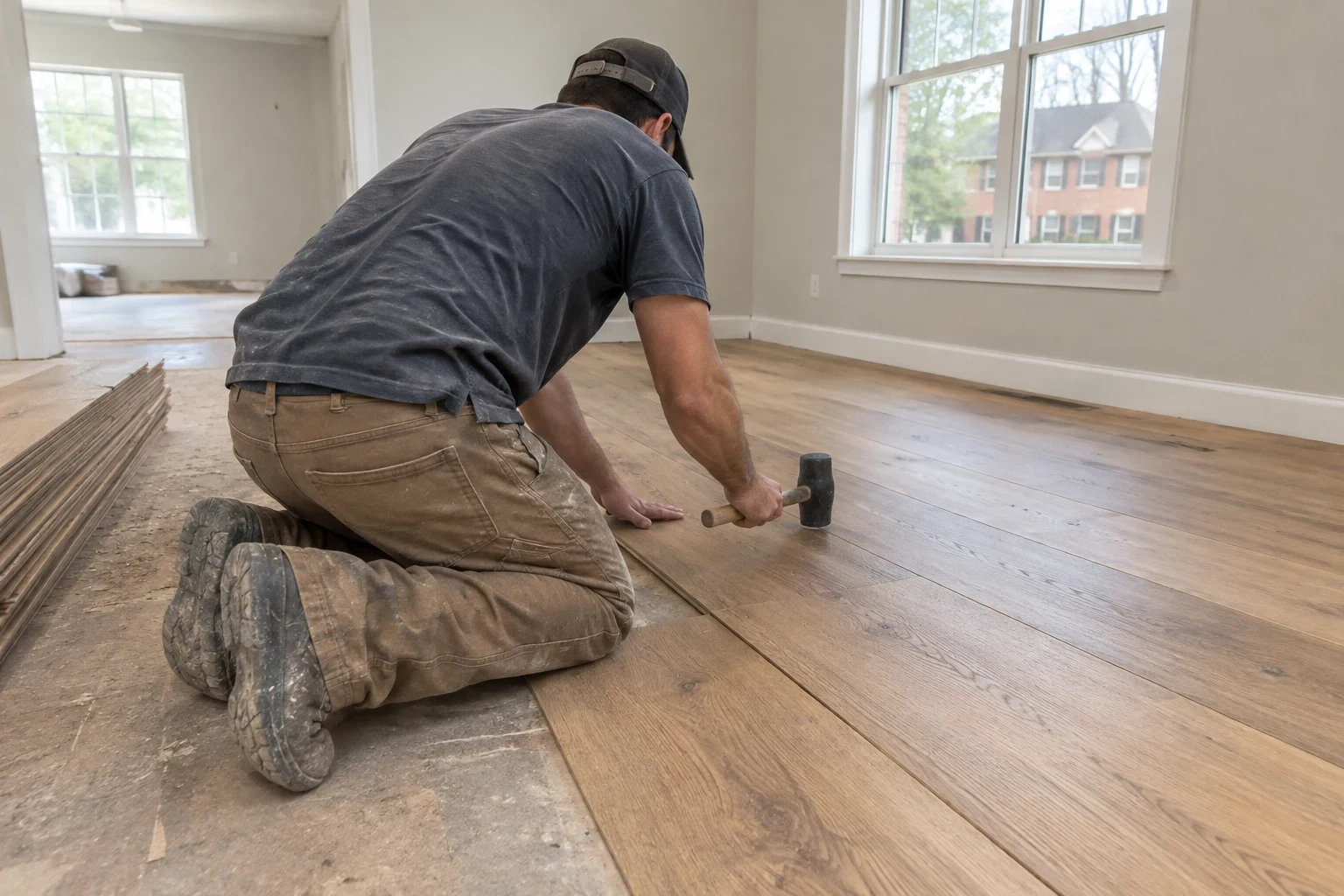
A new floor is only as good as what sits under it. We check the subfloor for moisture, flatness and soft spots, fix what needs fixing, then install hardwood, engineered wood, vinyl plank or tile. You get photos of each stage, start to finish.
A floor that stays flat, quiet and tight
Most flooring problems start below the surface. Cupped boards, popping planks and cracked grout usually trace back to a damp subfloor, a dip in the framing or a layer that was never fastened properly. We treat the installation as two jobs: getting the base right, then laying the finish floor with care at every edge and transition.
We photograph the subfloor once the old flooring comes up, record our moisture readings and show you any repairs before they get covered. Homes with crawlspaces in our humid summers often show higher readings than you would expect, so we measure rather than guess.
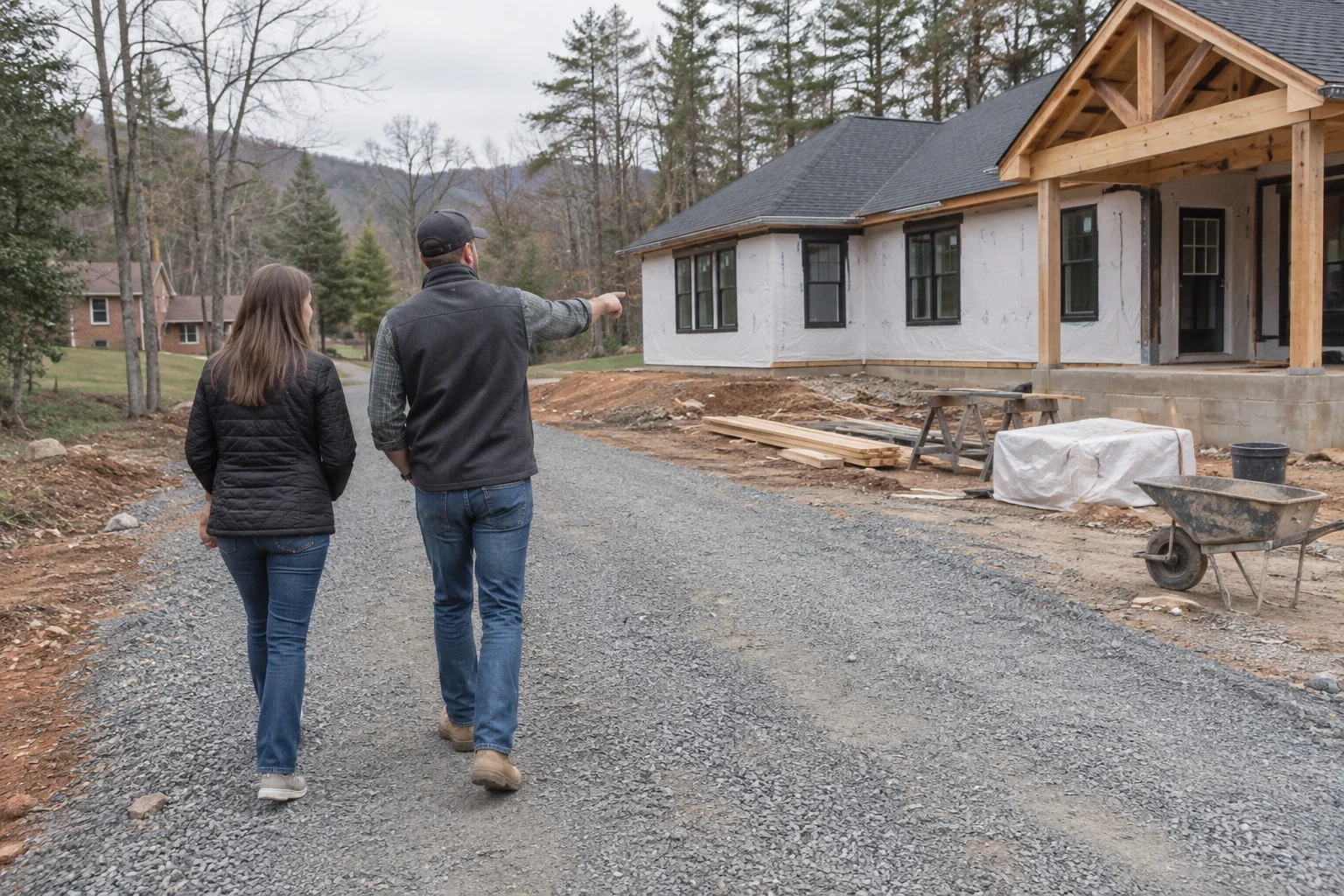
We install flooring in new custom homes we build, as part of a larger home remodeling project, or as a stand-alone job in a single room or a whole level.
What our flooring work covers
- Removal of old flooring
- We take up carpet, vinyl, laminate or old tile and haul it away. Staples, tack strip and adhesive ridges come out so nothing telegraphs through the new floor.
- Moisture testing
- We take meter readings of the subfloor and, for wood, the new material itself. Wood goes down only when the two are within the range the manufacturer calls for.
- Subfloor repair and leveling
- Soft or delaminated plywood gets replaced, loose sheathing is screwed down to the joists, and low spots are filled or high spots ground. This is what keeps a floor quiet for years.
- Installation of your chosen material
- Site-finished or prefinished hardwood, engineered wood, luxury vinyl plank and porcelain or ceramic tile. Each is fastened, glued or floated the way its maker specifies.
- Trim, transitions and stairs
- We fit thresholds, reducers and base shoe so rooms meet cleanly, and we can wrap stair treads and risers to match.
- Cleanup and a full record
- We vacuum the work area daily and hand over a set of photos showing the subfloor, repairs and finished floor.
Signs it is time for new flooring
Soft or bouncy spots
A floor that gives underfoot usually means damaged subfloor or a weak joist connection. Covering it with new flooring only hides the problem for a while.
Cupping or crowning boards
Edges that rise above the center of a board, or the reverse, point to moisture moving through the wood. We find the source before we replace anything.
Gaps and squeaks
Seasonal gaps are normal in solid wood, but wide, permanent gaps and constant squeaking mean fasteners have loosened or the boards were never acclimated.
Cracked tile or loose grout
Cracks that run across several tiles often follow movement in the floor below. A stiffer base and proper underlayment usually solve it.
Worn finish you cannot refinish
Engineered floors with a thin wear layer and most vinyl products cannot be sanded. Once they are worn through, replacement is the honest answer.
How a flooring job runs
- 1
Project consultation by phone
You tell us the rooms, the look you want and anything you have noticed underfoot. We talk through materials and set a time to visit.
- 2
Site visit and written estimate
We measure, check the floor for bounce and level, and note current conditions. You receive a written, line-item estimate that separates material, labor and any likely subfloor work.
- 3
Delivery and acclimation
Wood and some vinyl products sit in the rooms for several days so they settle to your home's conditions. We confirm moisture readings before starting.
- 4
Prep and installation
Old flooring comes out, the subfloor is documented and repaired, and the new floor goes down. We protect adjoining rooms and keep a clear path through the house.
- 5
Walkthrough
We walk the finished floor with you, fit any last trim and send the complete job record for your files.
What shapes the cost of a new floor
Two floors of the same size can price very differently. The material you choose matters, but so does what we find once the old floor is up. We show you photos of any added subfloor work and explain it before it goes ahead.
- Square footage and layout
- Open rooms go quickly. Closets, angled walls and many doorways add cutting and fitting time.
- Material and pattern
- Solid hardwood, engineered wood, vinyl plank and tile differ in cost and labor. Herringbone or diagonal layouts take longer than straight runs.
- Subfloor condition
- Replacing damaged plywood, adding screws or leveling low areas adds to the job. It is also the step that protects your investment.
- Removal and disposal
- Pulling up glued-down vinyl or tile set in mortar takes more effort than lifting carpet.
- Stairs and transitions
- Each stair tread and riser is fitted by hand, and matching transitions between rooms add material and time.
Flooring installation questions
Something not covered here? (828) 813-1074
Can you put new flooring over my old floor?
Sometimes. Floating vinyl or engineered wood can go over sound, flat tile or sheet vinyl. Carpet always comes out, and we usually remove old wood or layered vinyl so we can inspect the subfloor and keep door heights right. We decide after seeing the floor in person.
Which flooring works best in kitchens and bathrooms?
Tile and luxury vinyl plank handle spills and humidity best. Engineered wood can work in a kitchen with sensible care, but we do not recommend solid hardwood in full bathrooms.
How long will my rooms be out of use?
A typical room of vinyl plank or engineered wood takes a day or two after prep. Tile needs extra time for mortar and grout to cure, and site-finished hardwood needs drying time between coats. We give you a day-by-day plan with the estimate.
Why does wood need to sit in the house first?
Wood swells and shrinks with humidity. Letting it adjust in your rooms, and checking it with a meter, keeps gaps and cupping to a minimum after installation.
Do you warranty your flooring installation?
Yes. Our flooring installation comes with a 1-year warranty on workmanship. Manufacturer coverage on the material itself is separate, and we will point you to it.
Where do you work, and in which states can you take on projects?
We are licensed in both North Carolina and South Carolina. Most of our flooring jobs are in Mills River and nearby towns such as Fletcher, Hendersonville and Brevard.
Start with a look at what is underfoot
Tell us about the rooms and the floor you have in mind. We will set up a project consultation, check the subfloor and show you exactly what we find.