ServicesGrading
Grading in Mills River
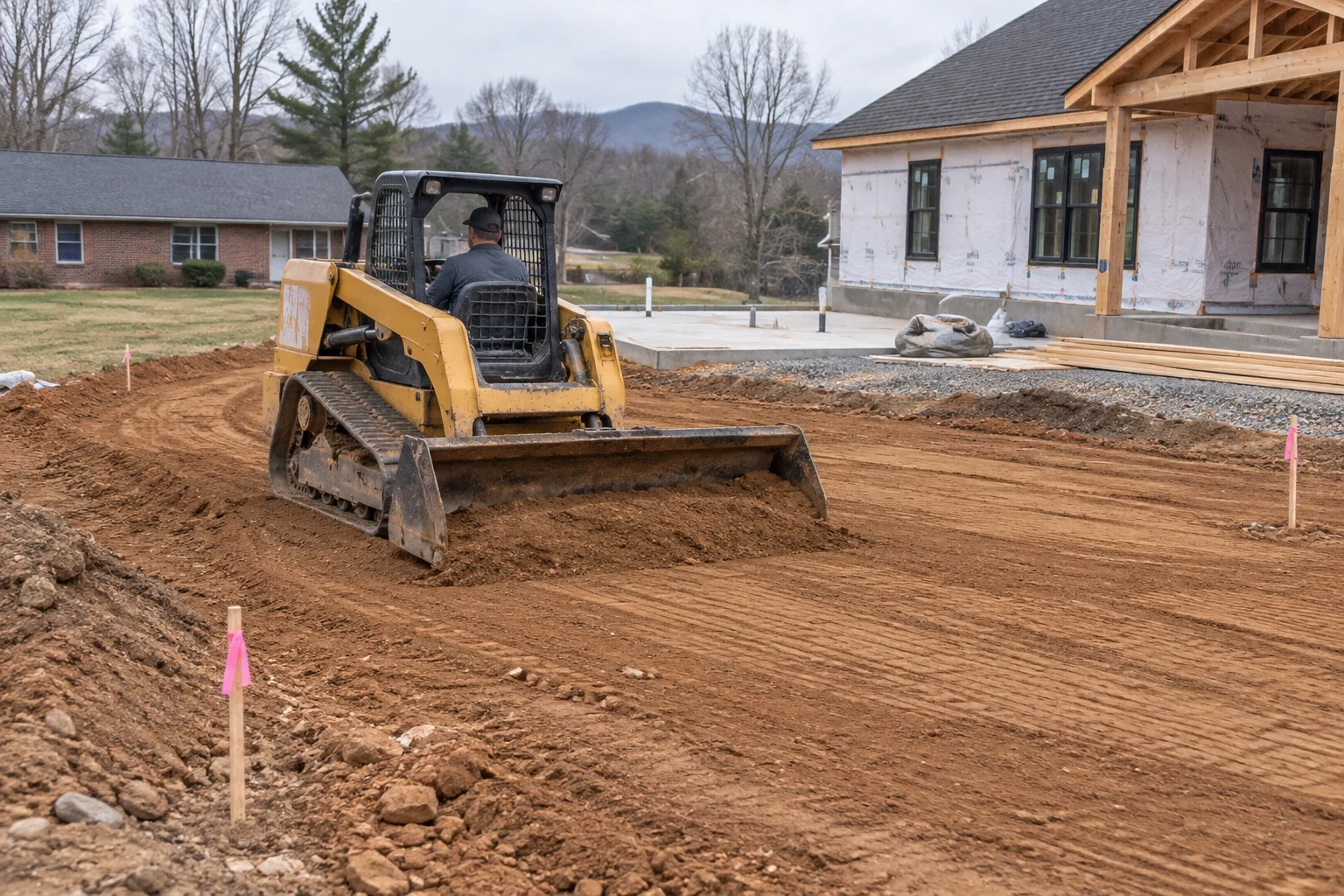
We shape the ground so your foundation sits on firm, level soil and rainwater runs away from the house instead of toward it. Rough grade, final grade and drainage corrections, with photos at each stage so you see what lies under the topsoil.
What grading does for a new build or an older lot
Grading is the earthwork between a cleared lot and a poured foundation, and again between finished framing and the first planting. We cut high spots, raise low ones, compact new soil in thin lifts and set slopes that carry water off the site. Done well, nobody notices it. Done poorly, it shows up years later as a wet crawlspace, a cracked slab or a driveway that washes out after every storm.
Many lots around Mills River have red clay under a thin layer of topsoil, with rock appearing where you least expect it. Clay holds water and shifts as it wets and dries, so how it is compacted and sloped matters more here than on sandy ground.
We photograph the site before we start, at subgrade and at final grade, and we share those images with you. If you are building with us, that record sits alongside the ones from land clearing and foundation work, so the history of your site stays in one place.
What our grading work includes
- Building pad preparation
- We cut and fill to a level pad sized to the footprint plus working room, then compact in thin lifts. Soil dumped in one deep pile settles unevenly, and that settlement ends up in the foundation.
- Slopes that move water away
- Final grade falls away from the walls on every side, typically about six inches over the first ten feet, so roof runoff and surface water head out into the yard.
- Swales on sloped lots
- Where water comes downhill toward the house, we shape shallow swales to catch it and steer it around the structure rather than against it.
- Driveway and access grading
- A hillside driveway needs a workable grade and a cross-slope or crown so it sheds water. We set a stable base so gravel or paving has something solid underneath.
- Regrading around existing homes
- For older homes and planned additions, we correct sunken backfill and reversed slopes that send water toward the foundation, then finish with topsoil ready for seed or sod.
- Erosion control while soil is open
- Silt fence, matting or straw goes down while the ground is bare. A heavy rain should not carry your topsoil into the road or a neighbor's yard.
Signs your lot needs grading
Water pooling against the foundation
Puddles that sit along the walls a day after rain mean the ground slopes the wrong way or has settled flat.
A damp or musty crawlspace
Moisture under the house often starts outside. Correcting the grade is usually the first fix to try, before anything goes inside the crawlspace.
Soil washing out after storms
Gullies in the yard, mud across the driveway or exposed roots on a slope all point to water moving too fast with nowhere planned to go.
Sunken backfill along the walls
Soil replaced around a foundation often sinks over the first few years, leaving a trough that collects water right where you want it least.
A new build or addition on the calendar
Any new footprint needs a pad and a plan for where water goes. Grading it properly early avoids rework once concrete is poured.
What moves the cost of grading
Grading is priced from the site itself, not from a chart. After the site walk you get a written estimate broken into the work that drives it. If something changes once the ground is open, such as buried rock, we show you photos and talk it through before going further.
Slope and soil volume
A steep lot needs more cut and fill to create a level pad. The more soil moved, the more machine time.
Rock and soil conditions
Rock may need breaking or removal, and soft or wet clay may need to be dug out and replaced with better material.
Soil trucked to or from the site
Some sites balance themselves. Others need fill trucked over or extra soil hauled away, and trucking adds up.
Access and equipment size
Tight spaces near an existing house call for smaller equipment that works more slowly than a full-size machine on open ground.
Permits, erosion control and season
Larger disturbed areas need more erosion control and may require a permit. Saturated clay cannot be compacted properly, so wet months can stretch the schedule.
How a grading job runs
- 1
Site walk and consultation
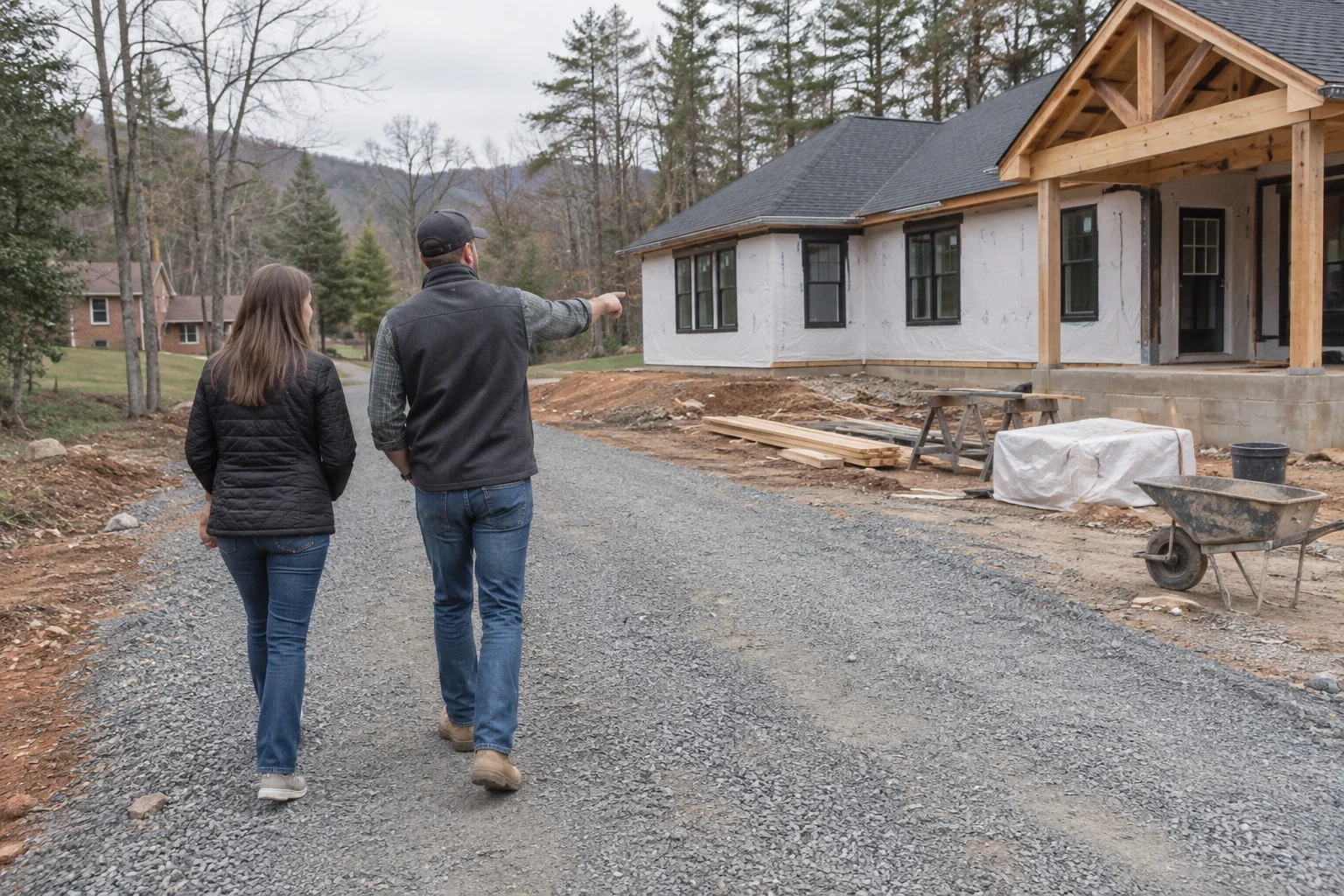
We walk the lot with you, look at where water comes from and where it leaves, and note rock, soft spots and existing drainage. You hear what we found and what we recommend before any machine arrives.
- 2
Written scope and permits
You get a written scope showing what will be cut, filled and shaped. Where the project needs a land disturbance or erosion control permit, we pull it and install the required controls.
- 3
Rough grade and compaction
Erosion controls go in first, then we cut, fill and compact in lifts. We photograph the subgrade before anything covers it, including any rock or wet soil we had to address.
- 4
Final grade and walkthrough
We shape the finished slopes, spread topsoil and walk the site with you, after a good rain if timing allows. The full record from each stage is yours to keep.
Grading questions we hear often
My lot looks flat. Do I still need grading?
Usually, yes. Even a gentle lot needs a level, compacted pad and finished slopes that carry water away from the house. Flat ground can actually be harder to drain than a slope, because water has no obvious place to go.
Can you regrade around a house I already live in?
Yes. Regrading is common before an addition or to stop water collecting at the foundation. We use smaller equipment close to the house, protect walkways and plantings where we can, and leave the yard ready for seed or sod.
What credentials do you carry for site work?
We are licensed in North Carolina and in South Carolina. We are glad to go over how that applies to your project during the consultation.
Does grading work come with a warranty?
Our work carries a 1-year warranty on workmanship. The stage-by-stage record we keep also gives you a clear account of how the ground under your home was prepared.
What happens if you hit rock?
We stop and show you what we found. Options include working around it, raising the grade over it, or breaking and removing it, and each affects cost differently. You decide before we continue.
How long does grading take?
It depends on the size of the area, how much soil moves and the weather. Clay that is too wet cannot be compacted, so we wait rather than build on a soft pad. We give you a realistic schedule once we have walked the site.
Start with a walk around your lot
A project consultation puts us on the ground with you to look at the slopes, the soil and where the water runs. From there you get a clear written scope and a plan documented at every stage.